
How DC became known as the Chocolate City
DC became known as the Chocolate City around 1970. There were many reasons for this migration. The first reason was jobs. The federal government was the first to desegregate in the late 1940s and open high-level jobs to African Americans. As a result, many African Americans moved to DC because they felt like there were better economic opportunities.
Another reason was the African American culture. By the 1940s, DC had one of the nation’s largest cultural African American scenes. This created an ethnic enclave. An ethnic enclave is when a certain group settles in an area and draws other people of the same ethnicity to the same location. This is exactly what happened in DC. Early African Americans created an ethnic enclave, and other African Americans moved to DC because of this early African American migration. Below is a text analysis of the causes of African American migration to DC.
Another reason for this title was the GI Bill. The GI Bill was a bill that gave white World War Two veterans breaks on houses in the suburbs. At the same time, Eisenhower signed a bill creating highways all over the U.S. In addition, many Whites were turned off by the presence of African Americans in their neighborhood and left for the suburbs driven by the GI bill and the birth of the highway. Since whites no longer wanted to live in the city, realtors sold these houses to African Americans. Also promoting this trend was redlining, which was a trend where banks would not lend money to African Africans who wanted to move into a White neighborhood. Below is an interactive map of demographic changes in DC for 1940 – 1980 as well as a text analysis of the causes. These designed neighborhoods were based on maps like the one shown below.
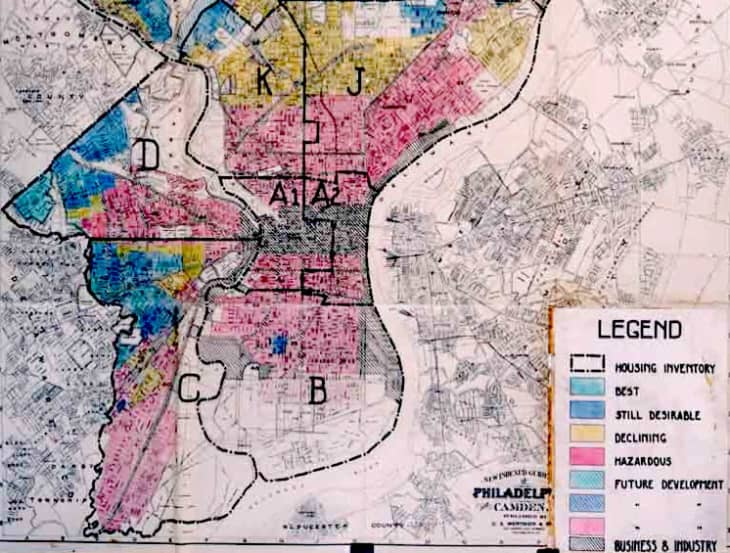
As the suburbs became an increasingly viable place to live, many whites left DC. Because whites still preferred to live in segregated communities, this forced many African Americans to move to the city. Below are two graphs and an interactive map that show the effect of white flight and how this changed the demographics of DC.
In 1950, right before white flight, there were over 500,000 white people in DC. In 1960, right after white flight, there were less than 350,000 people in DC. After 1960, whites continued to leave DC in favor of the suburbs. This is because even though white flight had largely stopped, white people preferred to live with other white people in the suburbs as opposed to in the city with African Americans, and suburbs became preferable to live in over the city due to crime.
In the meantime, as this interactive map shows, in 1950, there were less than 300,000 African Americans in DC. In 1960, there were over 400,000 African Americans in DC. This is because white flight drove African Americans out of the suburbs and into the city. Then, when the suburbs became a better option than the city, African Americans were forced to live in the city because they often couldn’t afford to live in the suburbs and those who could were driven out by white people.
This drastically changed the demographics of DC. In 1950, only 35% of people in DC were African-American. In 1960, 54% percent of people were African American. By 1970, which was right after cities had become unsafe, African Americans made up over 70% of DC’s population.
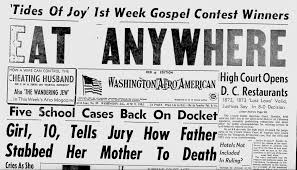
However, it wasn’t just white people forcing African Americans to move to DC that caused this demographic change. A little-known supreme court ruling in 1953 banning segregation in DC also made DC a very attractive destination for African-Americans. Below is a photo of a newspaper article talking about the ruling.
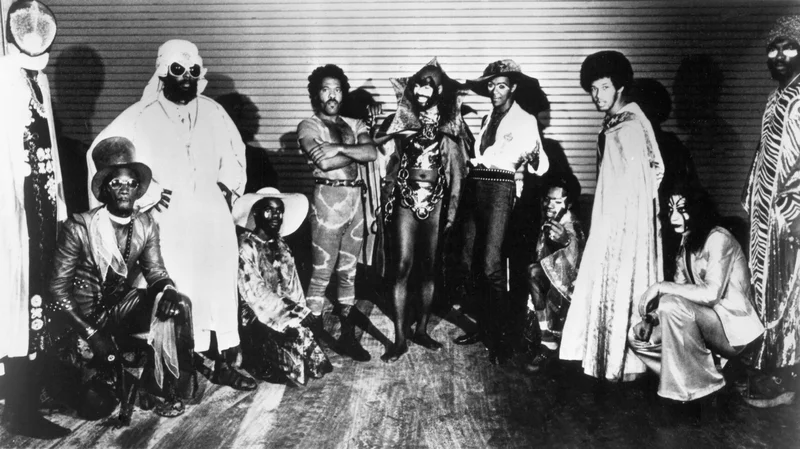
However, it would not be until the 1970s that DC would get its name as the Chocolate City. Local DJs had been referring to DC as the Chocolate City for a few years, but it would not be until Parliament released the album Chocolate City that the name would be memorialized. A picture of the group Parliament can be seen below.
Following this album, other Gogo artists, such as Chuck Brown who can be seen below, would promote the term “Chocolate City”.
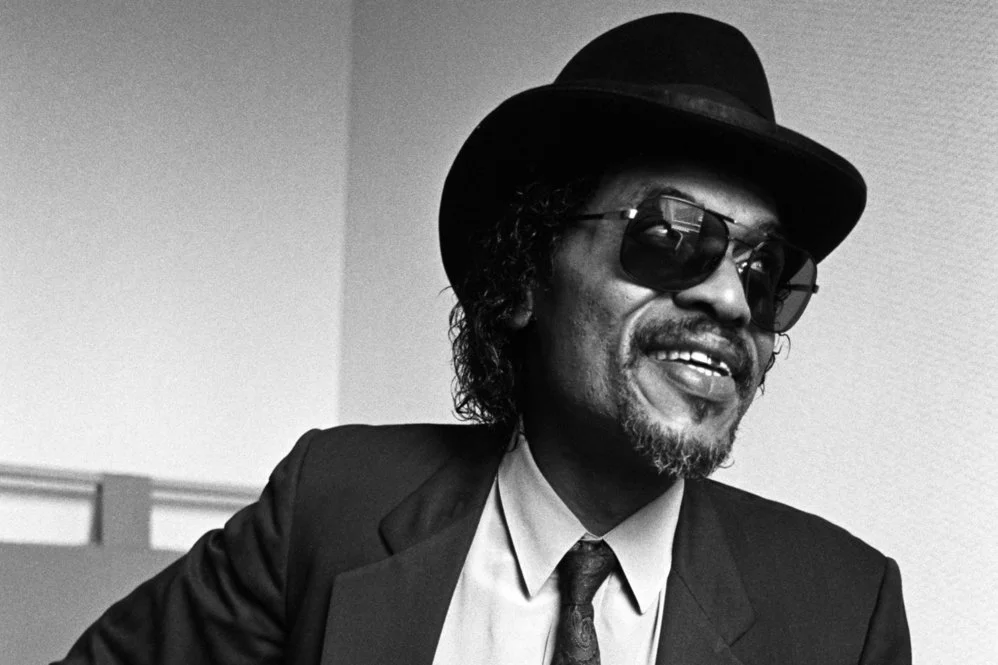
These artists would get gigs in nightclubs, which promoted the “Chocolate City” nickname. Three nightclubs that were particularly well-known for promoting this name were The Icebox, Kilimanjaro Nightclub, and Aqua Nightclub. All three of these clubs can be seen on the interactive map below.
The term “Chocolate” became so popular that it for a time became more popular than the term “African-American” as the Ngram below will show. However, this period passed and there is an ongoing effort to preserve DC’s history as the Chocolate City.
Resource Page
- https://www.apartmenttherapy.com/white-flight-2-36805862
- https://images.app.goo.gl/H619caqcntzTmitM6
- https://www.npr.org/sections/codeswitch/2016/06/24/482788572/on-parliament-funkadelic-and-a-less-squeaky-clean-picture-of-blackness
- https://www.npr.org/sections/therecord/2012/05/17/152854093/go-go-legend-chuck-brown-dies
- https://historicsites.dcpreservation.org/items/show/1191#&gid=1&pid=5
- https://wamu.org/story/16/09/23/when_blacks_fled_the_south_dc_became_home_for_many_from_north_carolina/
- https://vinyldistractions.com/parliament-chocolate-city/
- https://www.proquest.com/hnpbaltimoreafricanamerican1/docview/2669647876/pageviewPDF/55944CB8D6B74B63PQ/1?accountid=14541&sourcetype=Historical%20Newspapers
- https://www.brookings.edu/articles/a-new-great-migration-is-bringing-black-americans-back-to-the-south/#:~:text=The%20second%20phase%20of%20the,Los%20Angeles%20and%20San%20Francisco.
“Études has saved us thousands of hours of work and has unlocked insights we never thought possible.”
Annie Steiner
CEO, Greenprint
Watch, Read, Listen
Join 900+ subscribers
Stay in the loop with everything you need to know.